




This page explains Curator's AI Chat for people who map processes and build automations day to day — without needing to know how to program. The idea is simple: you describe what you want in plain language; the artificial intelligence builds or fixes the robot; you review and approve.
In Curator's side menu, open "Agent (AI Chat)". The golden rule: the chat does not work in a vacuum. It needs to know which robot it will touch.
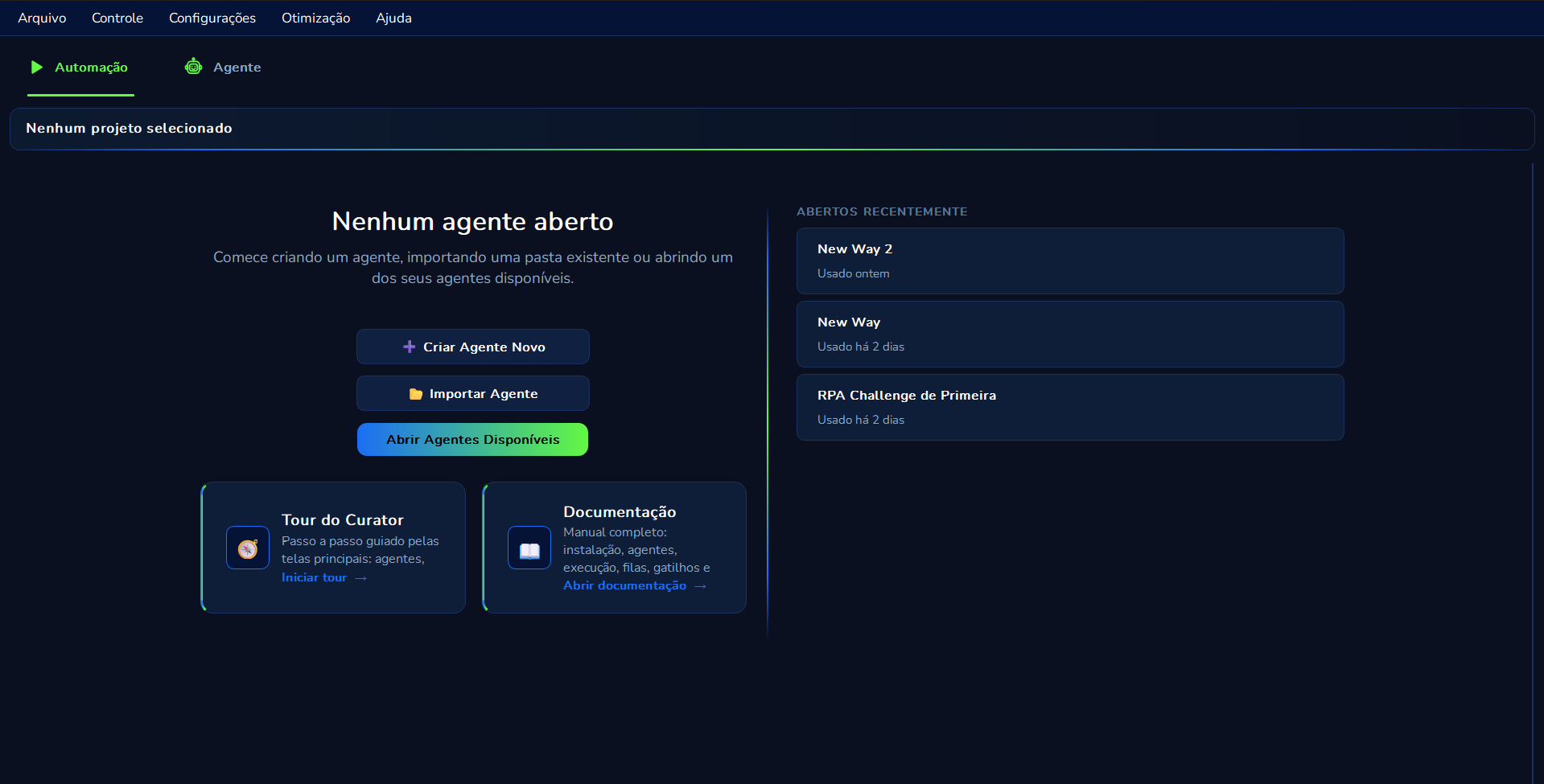
With no project open, use "Create New Agent", "Import Agent", or "Open Available Agents". On the right, "RECENTLY OPENED" lists the latest robots. While the chat is blocked, the footer warns: "Chat blocked — select a project in Automation."
The screen has three regions: conversation list on the left, conversation in the middle, and writing field at the bottom. You do not need to memorize every button — these five points are enough to work.
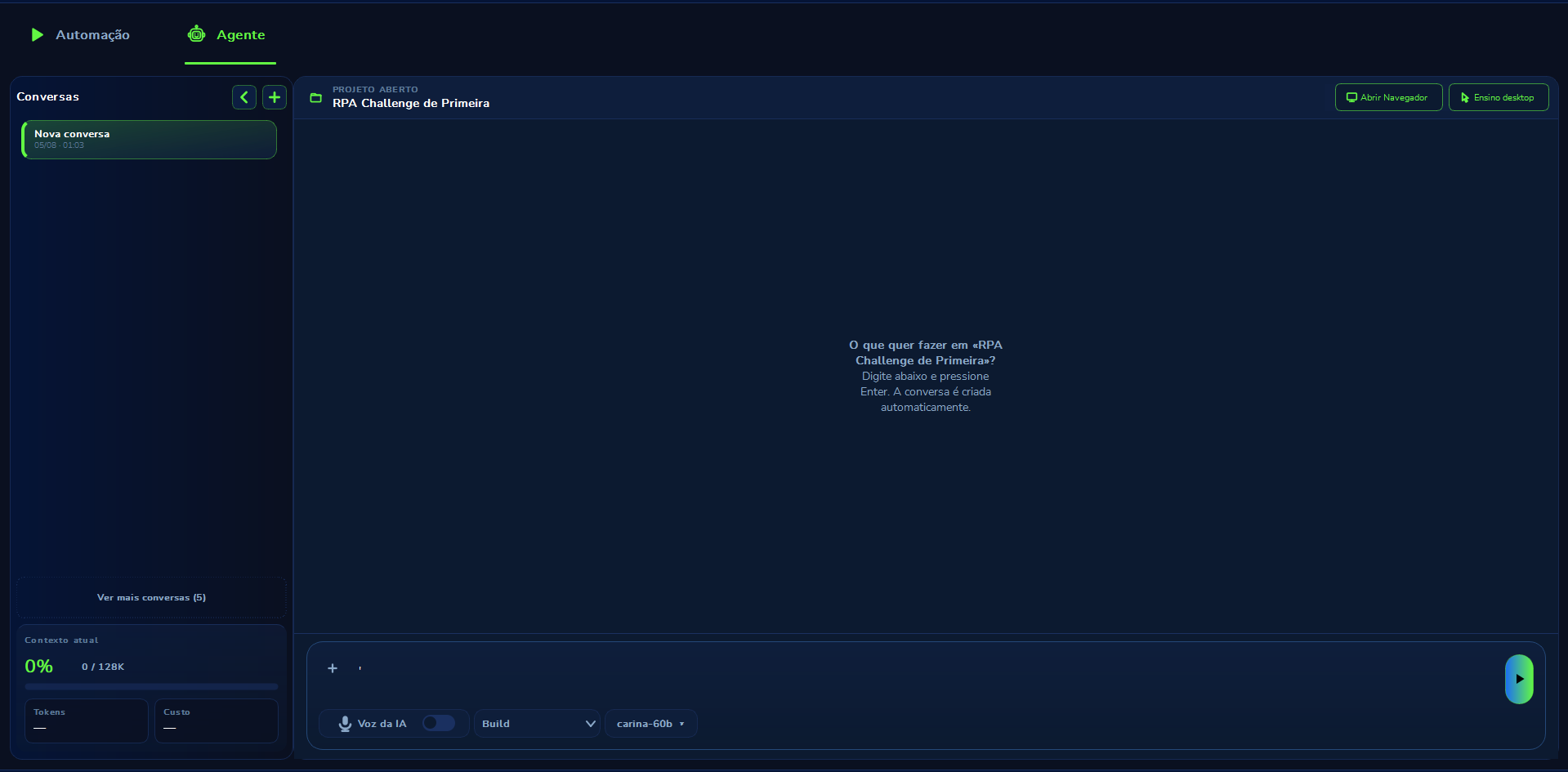
While working, the status bar is not decoration — it says what is happening:
| Message | In plain language |
|---|---|
| "Pensando…" / "Thinking…" | Still reasoning, not touching anything yet. |
| "Lendo arquivos…" / "Reading files…" | Opening the robot's files to understand the process. |
| "Preparando alterações…" / "Preparing changes…" | Writing what will change. |
| "Aguardando você…" / "Waiting for you…" | It stopped and needs your answer or approval. |
While the AI works, the send button becomes "Stop reasoning · Esc". At the end, "Worked for" shows the time spent.
This is the most important section on the page. The mode defines what the artificial intelligence is allowed to do. Think of it as an access badge: the same assistant, with different authorizations. Choosing the wrong mode is the number one cause of “the AI did nothing” or “the AI changed things I did not want”.
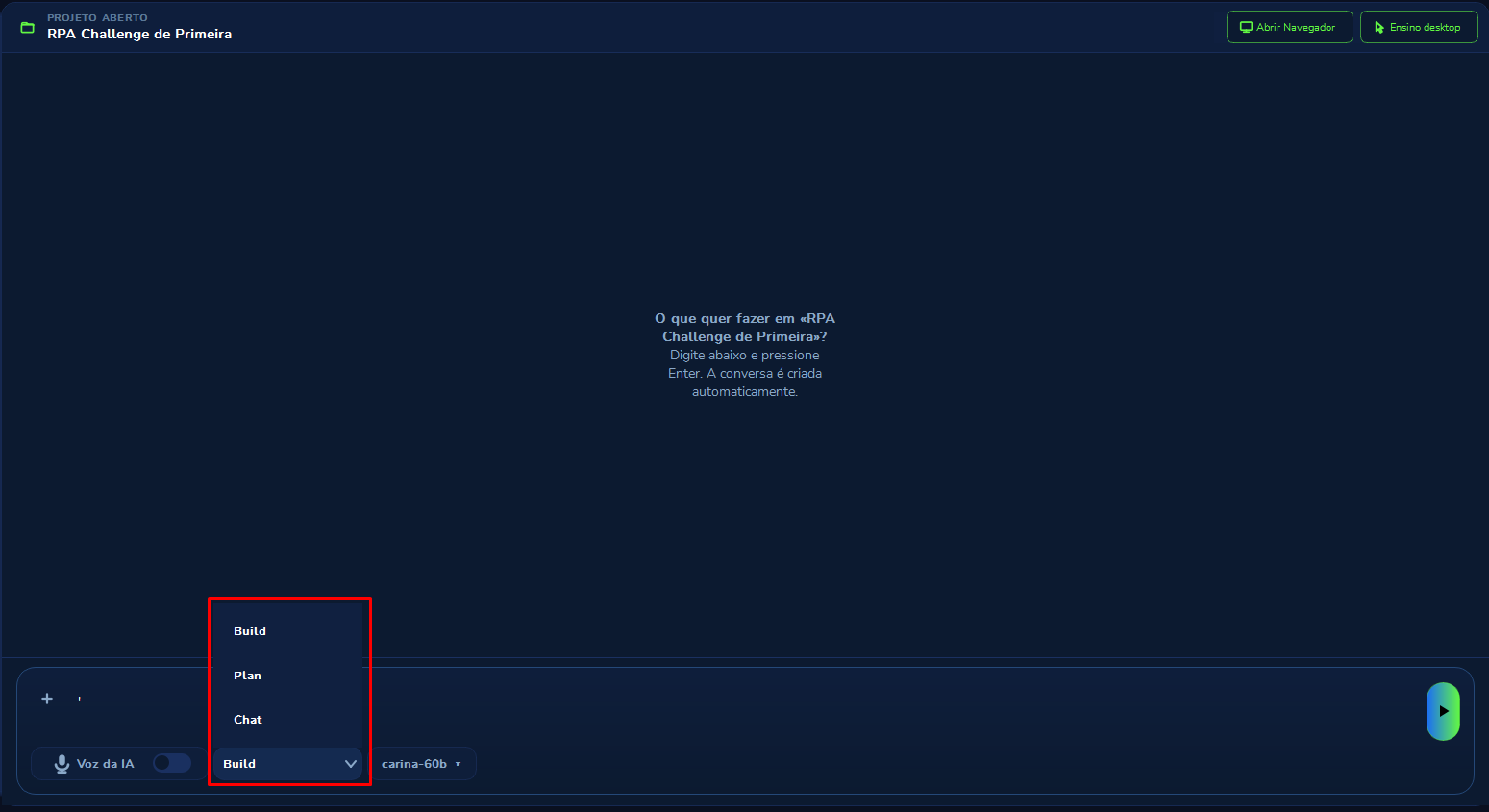
The selector sits in the footer. The tooltip sums it up: "Curator · Build edits; Plan only researches; Chat only talks."
| Mode | What it does | When to use |
|---|---|---|
| Chat | Talk only. Does not open or change files. | Ask a conceptual question. Fastest and cheapest. |
| Plan | Reads the robot and writes a plan. Does not change code — the lock is real, not a promise. | Large task, several options, or a robot you do not know yet. |
| Build | The only mode that changes the robot. Everything shows in "Changes" and can be undone. | When you already know what you want and want it done. |
How to leave Plan: read the plan and answer “go ahead”, “start”, or “yes”. Switch the selector to Build and the AI executes what was agreed.
In short: ask in Chat, agree in Plan, execute in Build, check in Changes. Undoing and starting over costs less than patching on top of a mistake.
You never have to trust the artificial intelligence blindly. Curator has three layers of control.
Whenever the AI touches files, "Changes" appears. Open it and compare before and after. There is also a "View changes" link inside each message. You do not need to understand code: look at what came in and what left, and ask whether it makes sense for the process.
Some actions do not run without your explicit authorization. An "Important action" card appears with "Approve" and "Decline". When the AI is unsure, "The AI needs an answer" appears — pick an option or write your own.
Before each request of yours, Curator takes a snapshot of the robot's files. "Undo" reverts what the AI did since your last message; "Redo" undoes the undo. Hovering a message of yours, you can also return the code to the state before that message — useful when the conversation went off the rails.
Imagine explaining over the phone, field by field, a portal full of similar buttons. It is hard and error-prone. With the AI it is the same. Curator's solution flips the logic: you show, instead of describing.
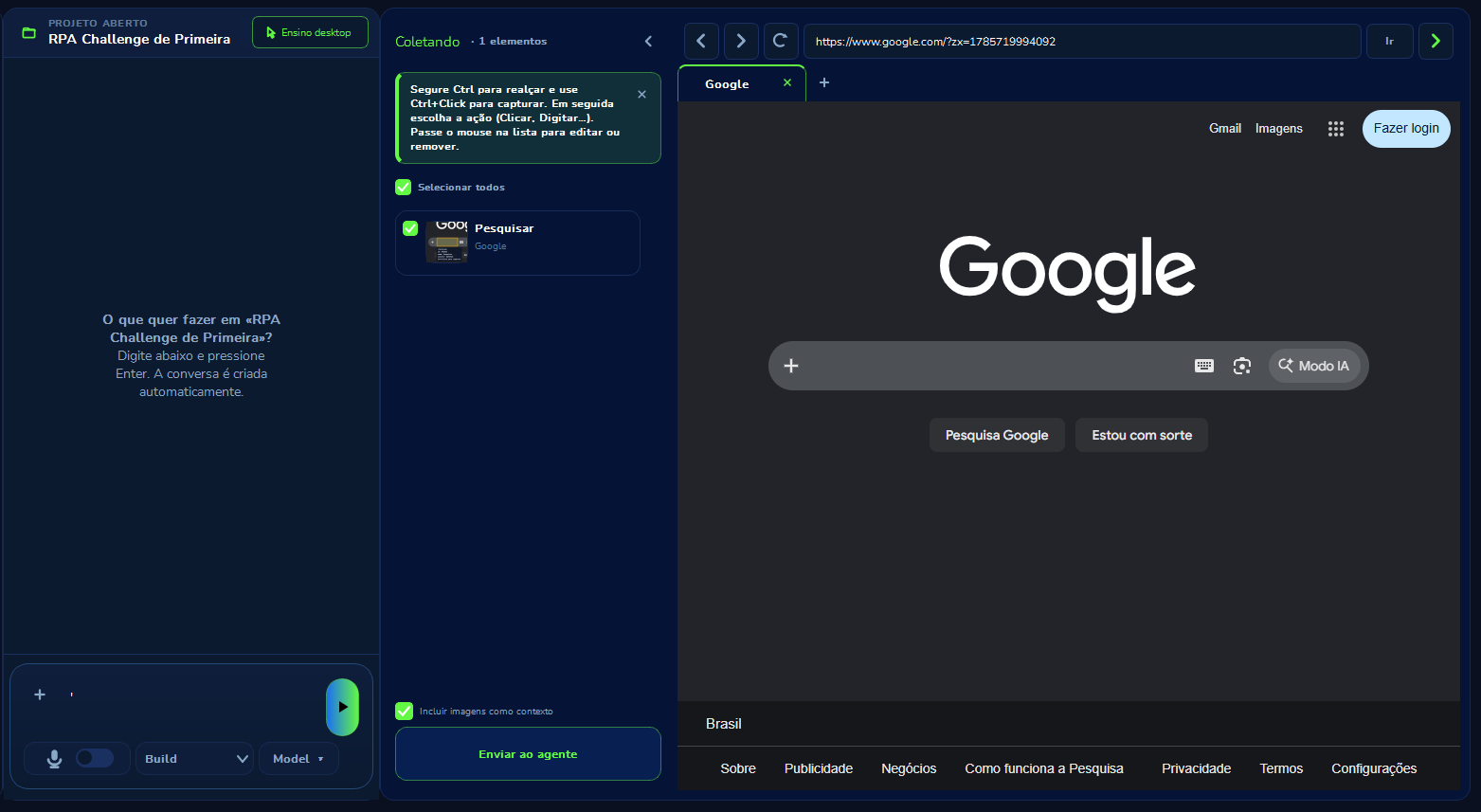
| Situation | Use |
|---|---|
| Website, portal, system that opens in a browser | "Open Browser" |
| ERP, .exe program, Windows window | "Desktop teaching" |
| Process that spans both | Both, one after the other, in the same conversation |
In office language: the AI is a colleague that reads, writes, and organizes, but you stay in charge of actions that touch the real world.
| The AI can | The AI does not |
|---|---|
| Read and change robot files (Build only) | Change code in Plan or Chat |
| Read attachments (Excel, PDF, image) | Browse the internet on its own |
| Inspect and organize queues; create triggers (schedules) | Start the robot run — the Run button is yours |
| Rehearse steps in the browser or on desktop (with your approval) | Undo effects that already happened outside your PC |
Deleting a queue item asks for the "Important action" card, because the queue lives in the cloud and Undo does not restore it. Queue and interpreter details are on the Queues and Interpreters pages.
A model is the brain that reads your request and produces the answer. Curator has no brain of its own: it talks to models from companies such as OpenAI, Anthropic, and Google, and handles the organization around them (reading files, asking for approval, storing the conversation).
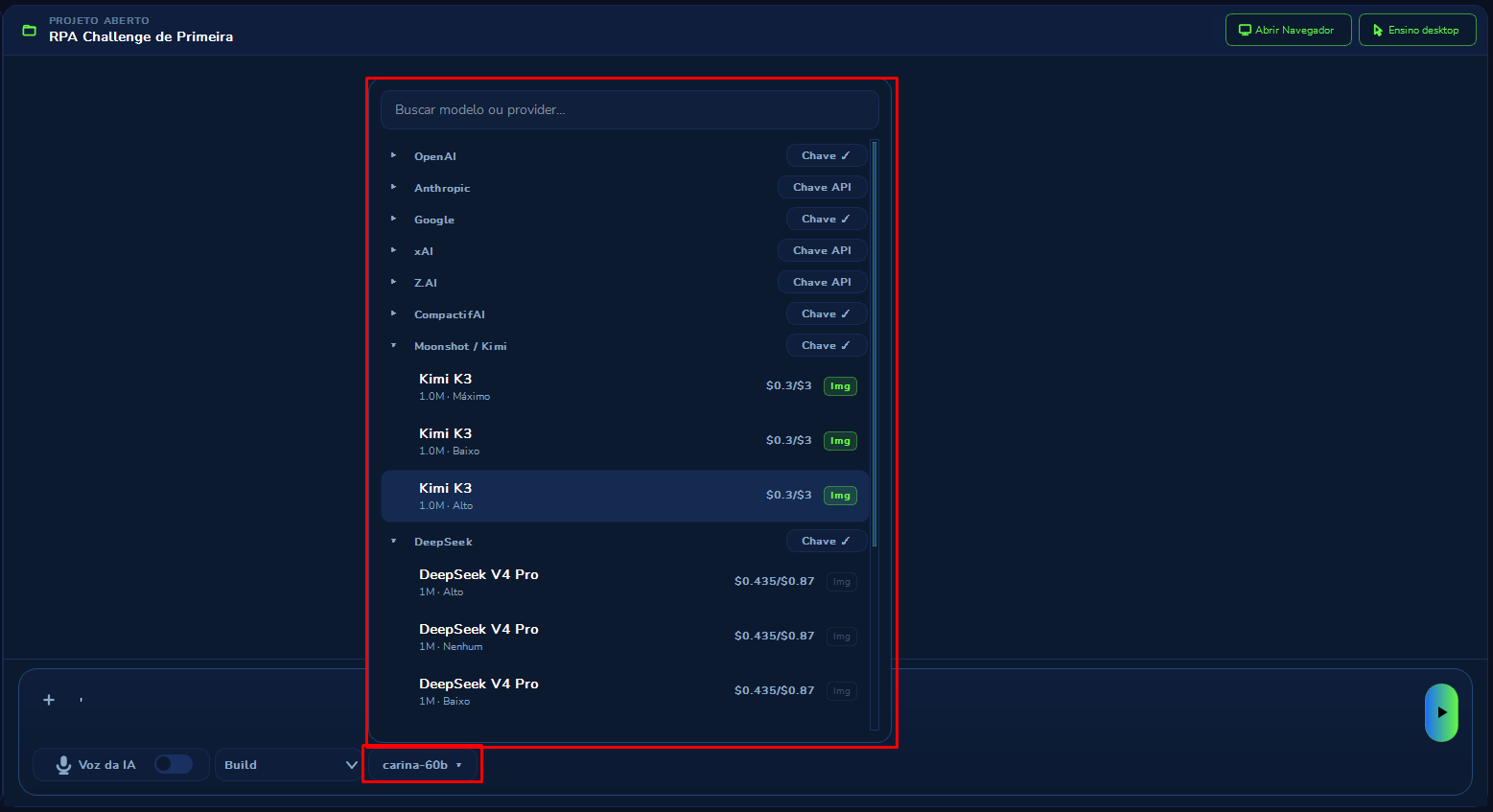
A typical label looks like GPT-5.5 · 272K · Medium: model name, working-memory size, and effort level. Curator's default — GPT-5.5 with Medium effort — works for most requests. When in doubt, stay with it.
| Situation | Suggestion |
|---|---|
| Simple question, small tweak | Flash or Lite model, low effort |
| Hard problem, error nobody finds | Pro / Max / Opus, high effort |
| You will attach screenshots | Model with the "Img" badge |
| Model appears unavailable | Register that provider's key (the password for your account there) |
Imagine a work desk. Everything the AI is “holding in mind” — conversation history, files read, attached images — takes space on that desk. The fuller it gets, the more expensive each new message becomes, and the higher the chance it loses early details.
In the conversation column, the "Current context" panel shows the usage bar. The "Tokens" and "Cost" cards track the estimated spend (the official bill is on your provider account). A token is simply the billing unit: a small piece of text.
"High context" or "Near the limit" warnings ask for a "New conversation". If the conversation is compacted into an automatic summary, old details may be lost — repeat the essentials in the current message.
You do not need this section to use the AI Chat. It only explains what looks “odd” on screen: why the AI reads four files before writing a line, why text appears little by little, and why it sometimes stops and waits for you.
In three pieces: you write the request; Curator on your PC packs the request, takes the file snapshot, and handles approvals; the AI model in the cloud is the consultant on the phone — it thinks and decides, but Curator has the hands in the room.
If you see "Trying again…", wait — Curator is retrying a transient failure on its own. Do not resend the message. "Reconnecting…" means the network flickered; the conversation is not lost.
Before the table, ask the three questions that solve most cases:
| What you see | What to do |
|---|---|
| "Chat blocked — select a project…" | Open or create a robot. |
| "AI Chat disabled — the robot is running." | Wait for the run to finish. |
| The AI explains but changes nothing | Switch the mode to Build and repeat. |
| Model with "API Key" | Register that provider's key. |
| "High context" / "Near the limit" | Open "New conversation". |
| Image seems ignored | Choose a model with the "Img" badge. |
| "Could not open the browser now." | Reinstall Curator; if it persists, contact support. |
| "Curator failure" / "Could not complete." | Close and reopen Curator; check the model key and balance. |
If none of that fixed it, support is at pye.tech/suporte. Share the robot name, mode, model, the exact error message, and what you asked versus what happened.
